In a world increasingly influenced by artificial intelligence, the nature of creativity itself is undergoing a seismic shift. The age-old notion that “everyone stands on the shoulders of those before them” is more relevant than ever—but in this new paradigm, the shoulders aren’t just human. They’re datasets.
Traditionally, artists have drawn inspiration from their predecessors without a formal obligation to “pay back” the lineage they draw from. This has been accepted as part of the creative continuum. But the rise of AI-generated art has stirred a much deeper and more contentious debate—one not just about influence, but about authorship, ethics, and identity.
Famed director Hayao Miyazaki once called AI-generated art “an insult to life itself.” His words underscore a fear that many artists share: that AI art, born not of lived experience but of statistical recombination, lacks soul. And while it’s true that all art imitates or builds upon what came before, the scale and opacity of AI’s mimicry have struck a nerve.
Many creators feel their work is being stolen—scraped into massive training datasets without consent, attribution, or compensation. As the flood of AI-generated content grows, there is a looming fear of being left behind. While it’s unrealistic to believe artists will disappear entirely, it’s equally naïve to think this transformation won’t bring real pain to those whose livelihoods depend on making art. In many industries, the business incentive is clear: reduce the cost of production. AI enables that, often at the expense of hiring full-time human artists.
But AI art is still in its infancy. Each iteration—each new model, each fine-tuned update—gets more sophisticated. The pace feels relentless. One of the most concerning aspects is how AI blends source material into its outputs. Once original, identifiable works become part of the data mix, they are effectively lost in a black hole of recombination. The resulting image may be new, but its ingredients are borrowed and often untraceable.
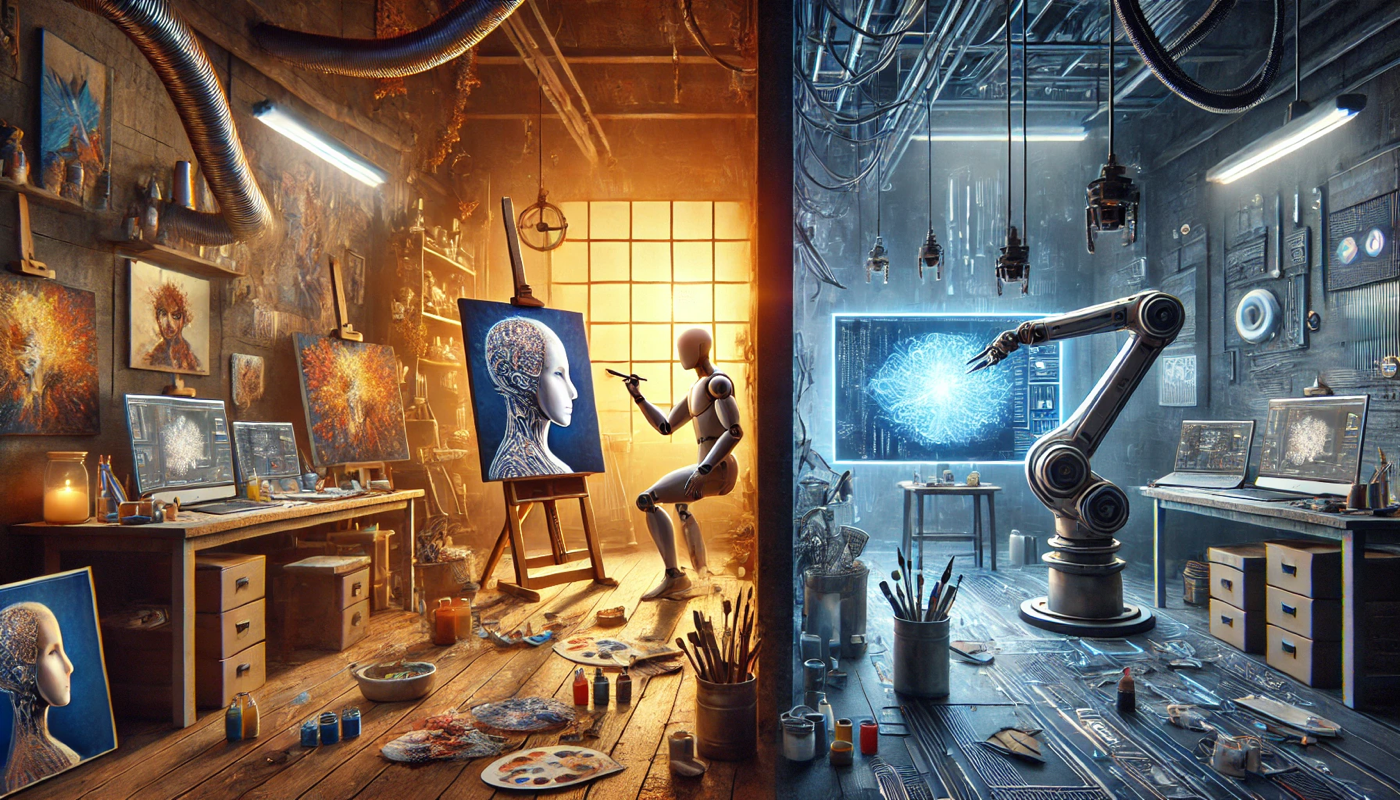
Despite these concerns, not all is doom and gloom. A fundamental truth remains: skilled artists can still see what others cannot. A trained eye can distinguish a masterpiece from mediocrity. In the hands of a true artist, AI becomes just another tool that can amplify creativity rather than replace it. While much of what we see today may be AI “slop,” that’s not new. Mediocre art has always existed. What matters is the vision behind the work, not just the method.
In many ways, the current debate mirrors the outcry that followed the rise of Photoshop. Once dismissed as a cheat, it has become a staple in the creative toolkit. AI may follow a similar trajectory. AI levels the playing field for the artist with vision but not technique, helping them bring their ideas to life.
The future of artistry isn’t one where humans are irrelevant. Instead, it’s a world where tools and artists evolve with them. The challenge is not to resist change but to shape it. As we redefine what it means to be creative, perhaps the most crucial question isn’t whether AI can make art but whether we can still recognize what makes art worth making. Just because we can does not mean that we should.